Featured Project · Co-Team Lead

Kidney Buddy

3 Years, 5 Versions, 1 Problem

Making renal nutrition easier to understand and manage.

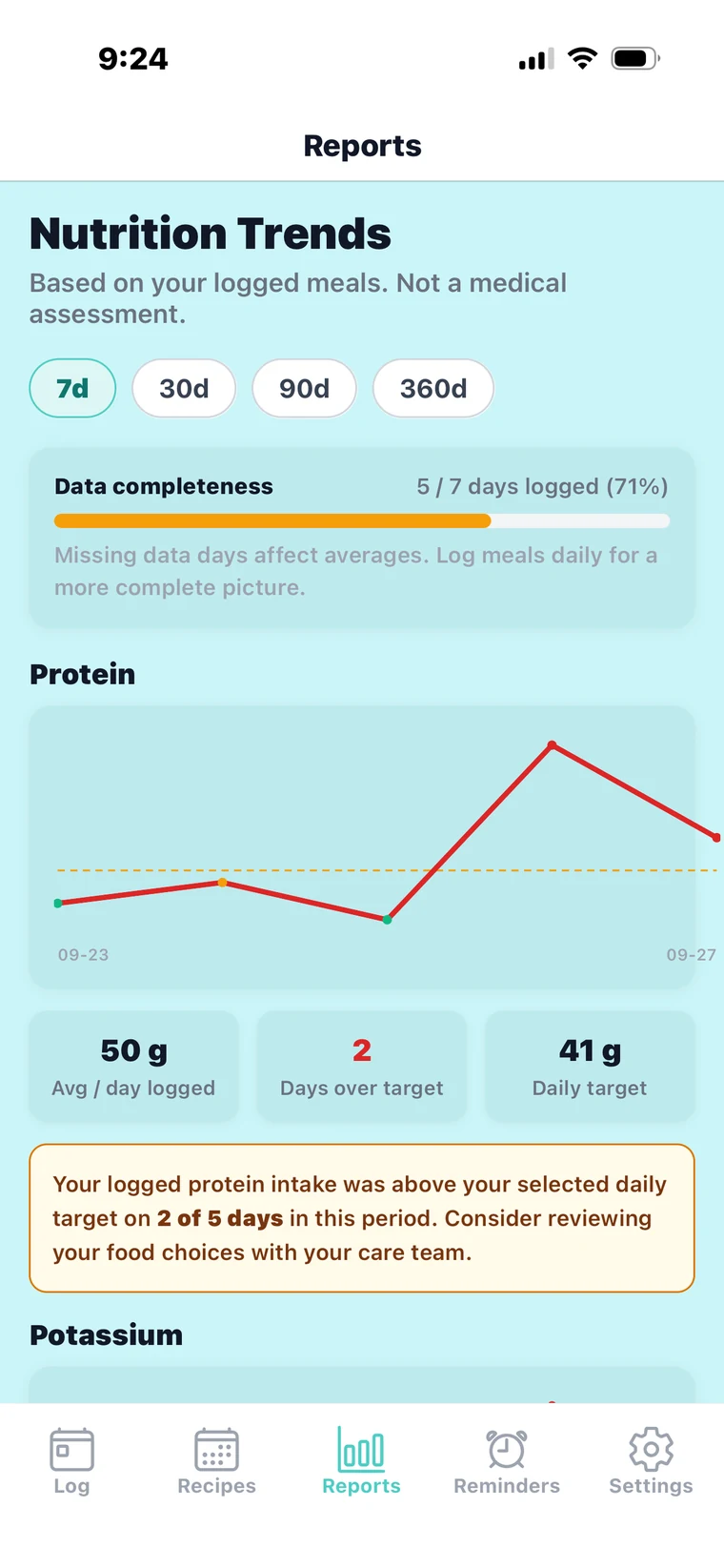
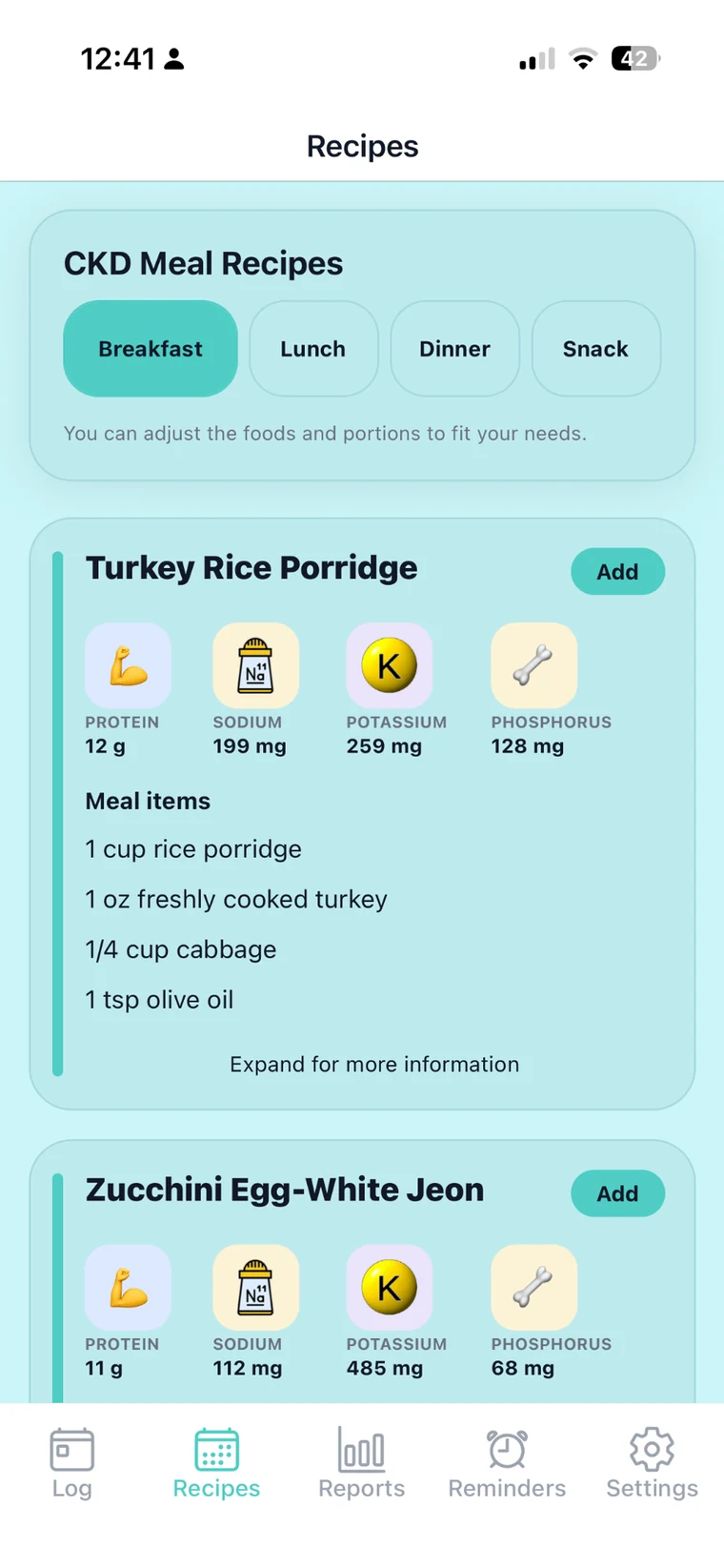
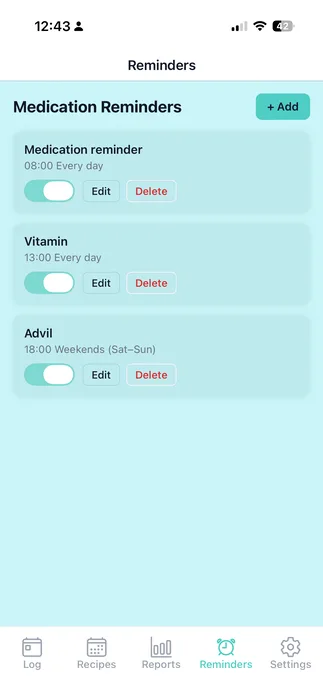
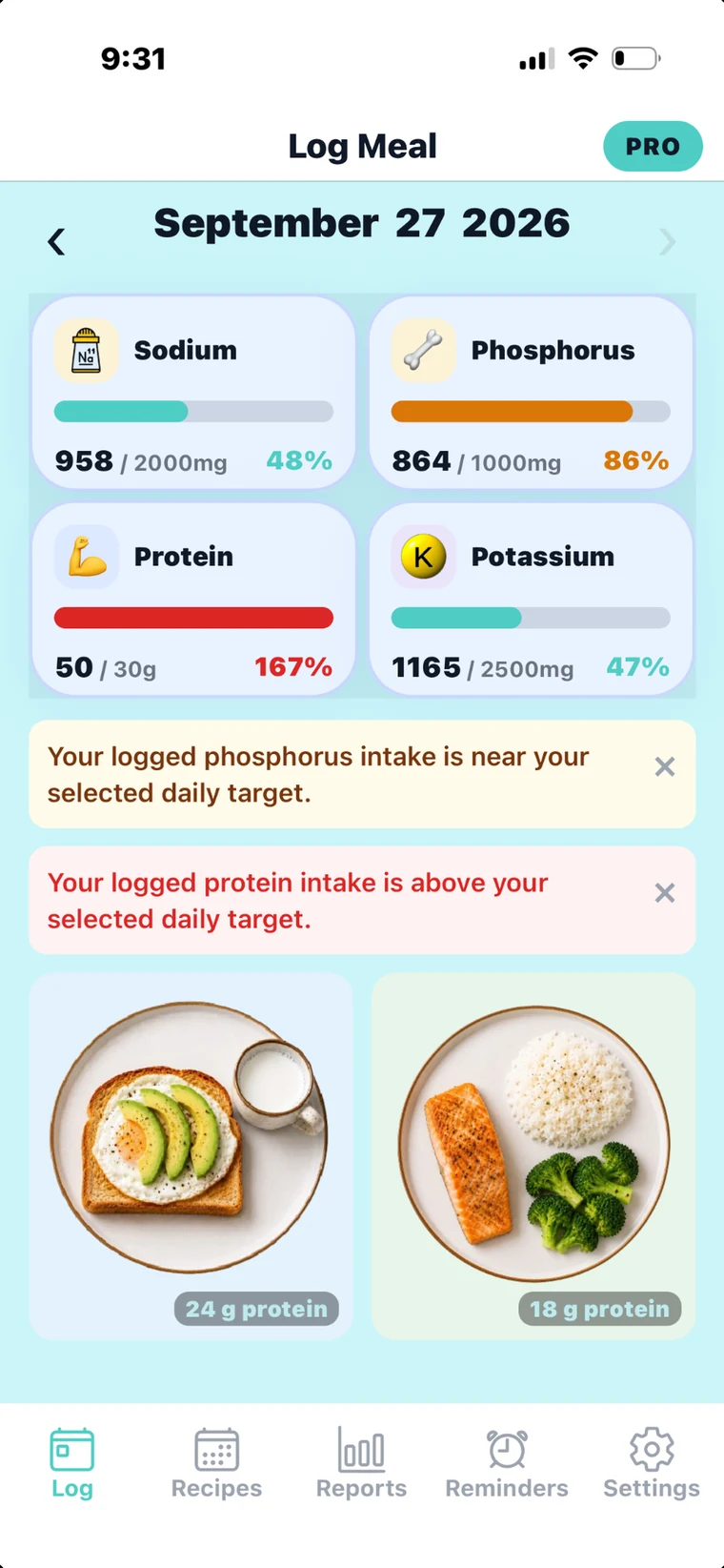
Current Kidney Buddy interface showing daily sodium, phosphorus, protein, and potassium tracking

Current Version 5 interface · cross-platform product

Why Kidney Buddy?

It Started With My Grandmother

Kidney Buddy began with a problem I saw in my own family. My grandmother, who has chronic kidney disease, had to carefully monitor nutrients such as sodium, potassium, phosphorus, and protein, yet figuring out what she could eat each day was often confusing. I wanted to make that process simpler.

Over the next three years, Kidney Buddy evolved through five major versions.

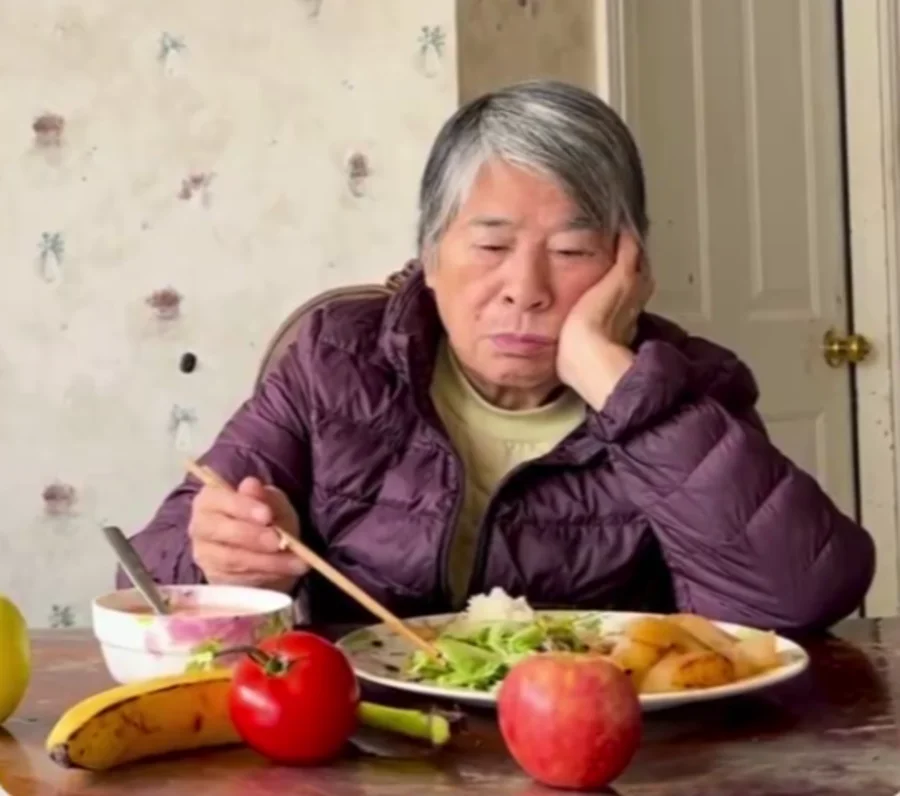
Alina's grandmother at the table with a meal, whose experience navigating a kidney-friendly diet inspired Kidney Buddy
My grandmother’s experience navigating a kidney-friendly diet inspired Kidney Buddy.

Visual Evolution

Three Years of Iteration

Five major versions make the progression visible: three prototype iterations before the incubator, followed by two product releases built for real users.

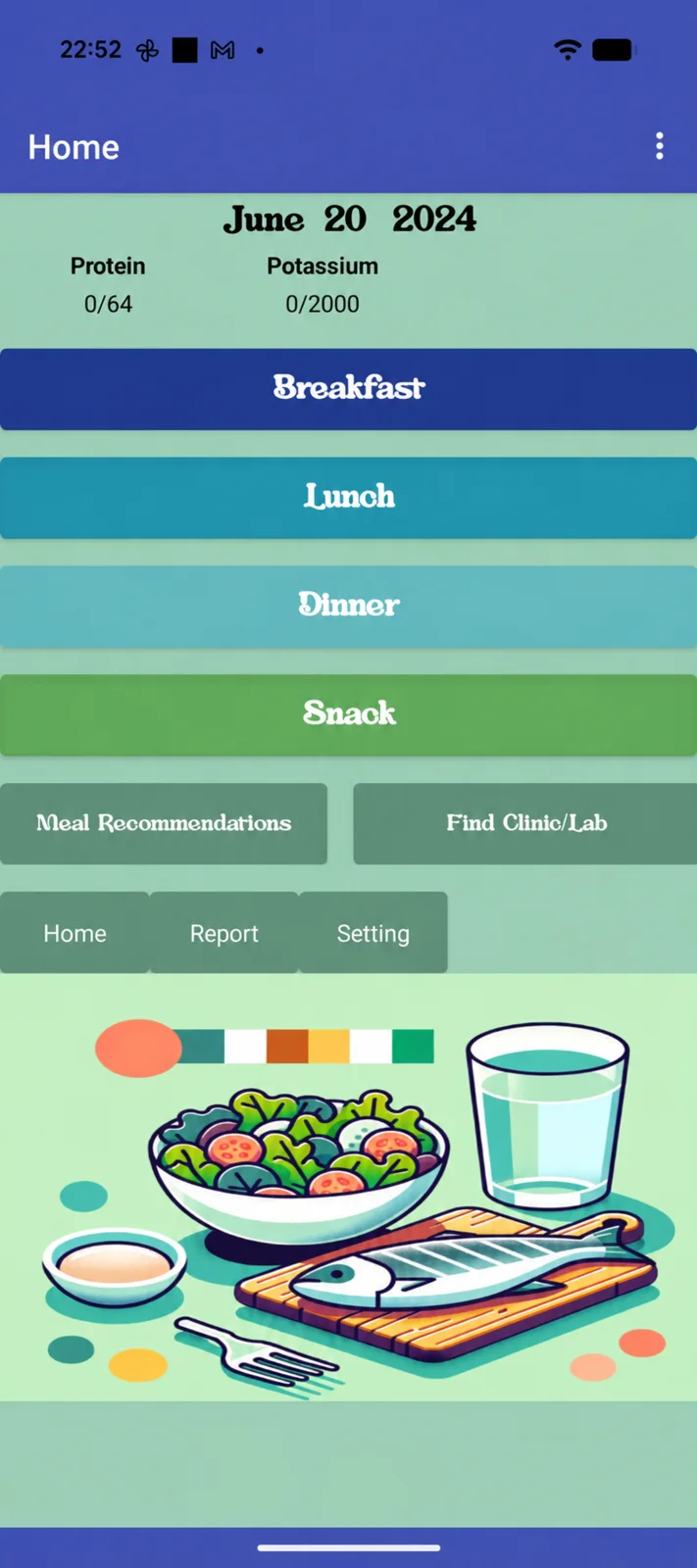
Version 1 Kidney Buddy home screen
Version 1Proof of ConceptProtein + potassium
Version 2 Kidney Buddy home screen
Version 2Feature ExpansionPlanning · reports · search
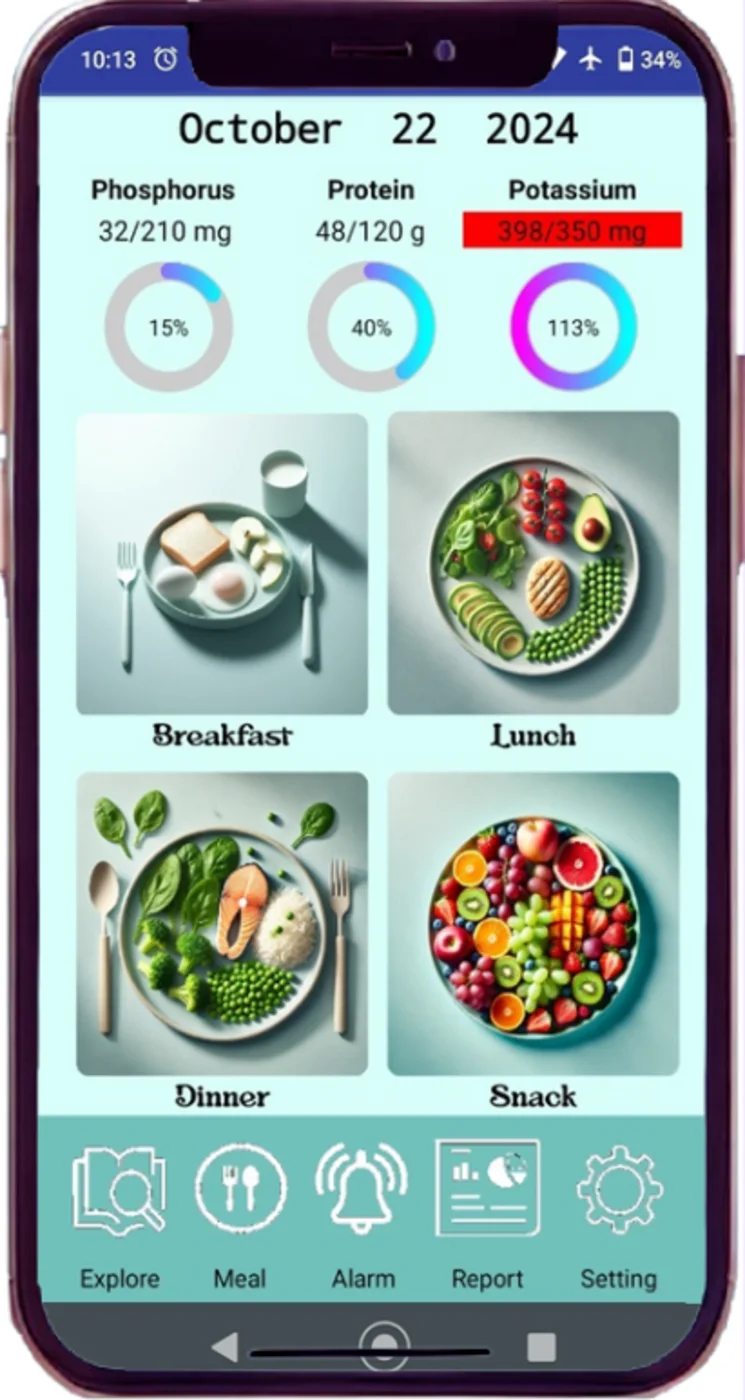
Version 3 Kidney Buddy prototype risk assessment screen
Version 3Refined PrototypeBroader CKD support
Version 4 Kidney Buddy Android product dashboard
Version 4Android ProductLocal-data Android release
Version 5 Kidney Buddy cross-platform nutrient dashboard
Version 5Cross-Platform ProductLocal-first · TypeScript · Android + iOS

Proof of concept → Feature expansion → Refined prototype → Android product → Cross-platform product · Published on Google Play and Apple App Store

What changed technically?

CapabilityVersion 1Version 2Version 3Version 4Version 5
Product stageInitial prototypeFeature-expanded prototypeRefined prototypeMarket-ready Android release · Published on Google PlayCross-platform product · Published on Google Play and Apple App Store
Primary storageLocalLocalLocalLocalLocal-first
Cloud sync————Selective / optional
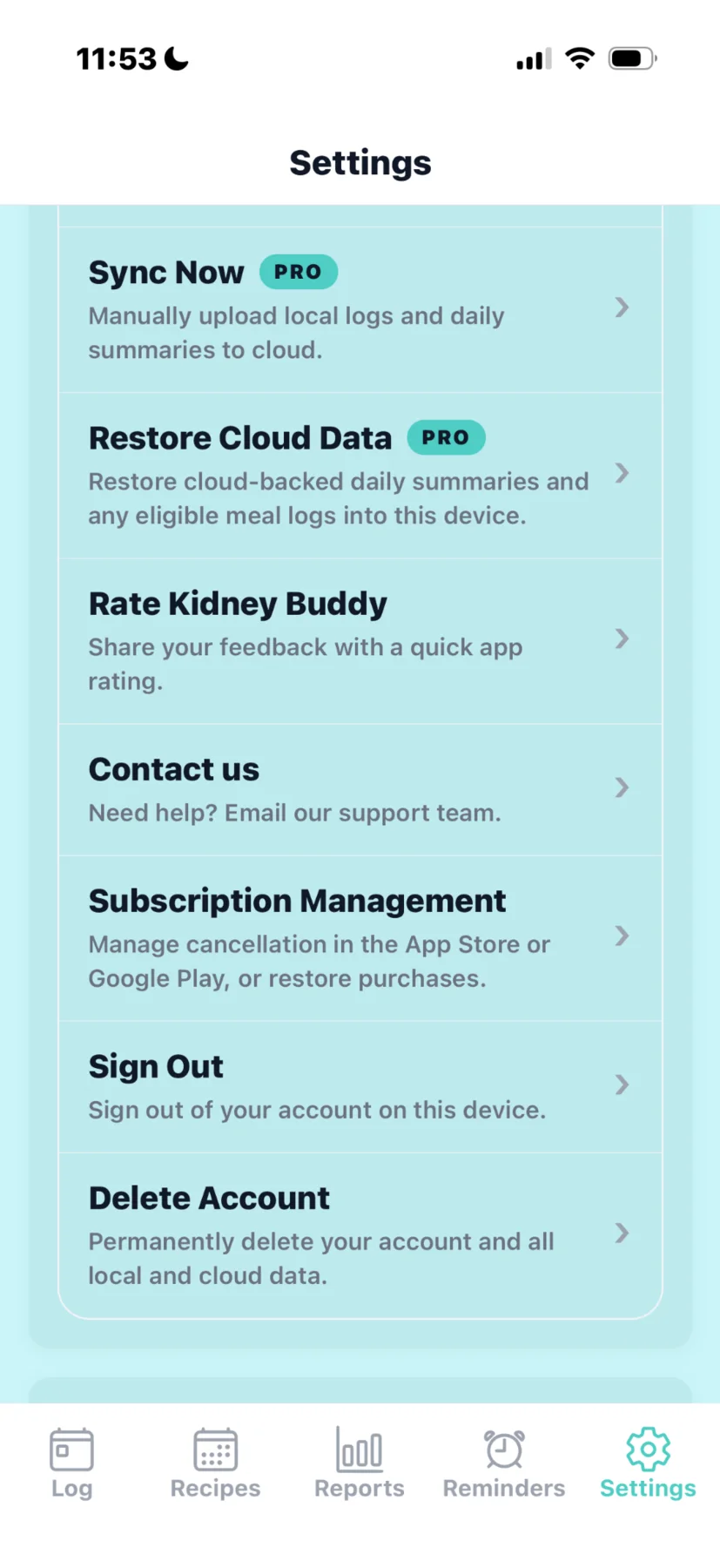
Backup & restore————Supported
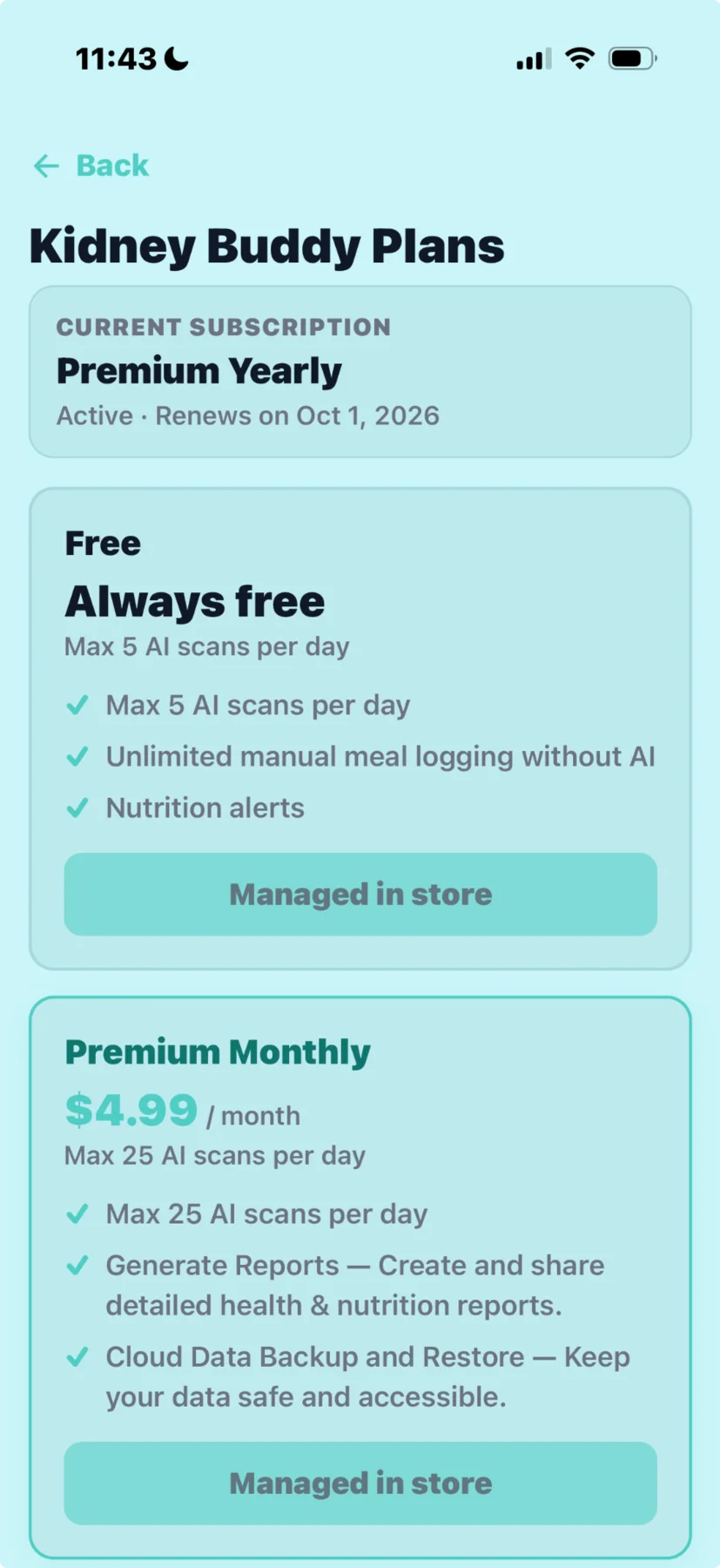
Subscriptions————Supported
AI usage limits———Free-user limitsCloud-enforced quotas
Key expansionBasic meal trackingMeal planning · reports · clinic/lab searchRisk assessment · tips · personalized settingsFood/label scan · meal totals · serving-size adjustmentLocal-first storage · optional backup/sync · subscriptions · iOS · sodium tracking
Nutrients trackedProtein · PotassiumProtein · PotassiumProtein · Potassium · PhosphorusProtein · Potassium · PhosphorusProtein · Potassium · Phosphorus · Sodium
Development toolsMIT App InventorMIT App InventorMIT App InventorMIT App InventorTypeScript · AI-assisted development
PlatformPrototypePrototypePrototypeAndroidAndroid + iOS

Version labels show the development sequence; dates and values visible inside screenshots may reflect test or capture data.

Development Journey

From Prototype to Product

Five versions, each built because the previous one revealed a new problem to solve.

Version 1Version 2Version 3MIT App Inventor IncubatorVersion 4Version 5
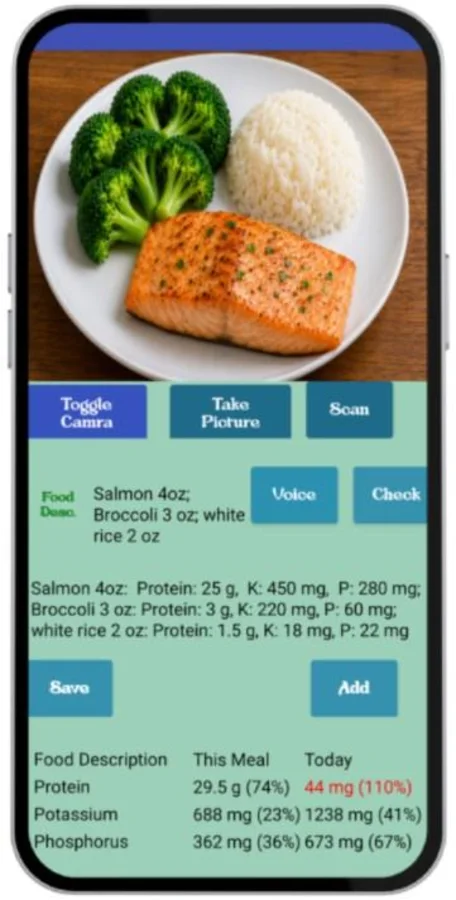
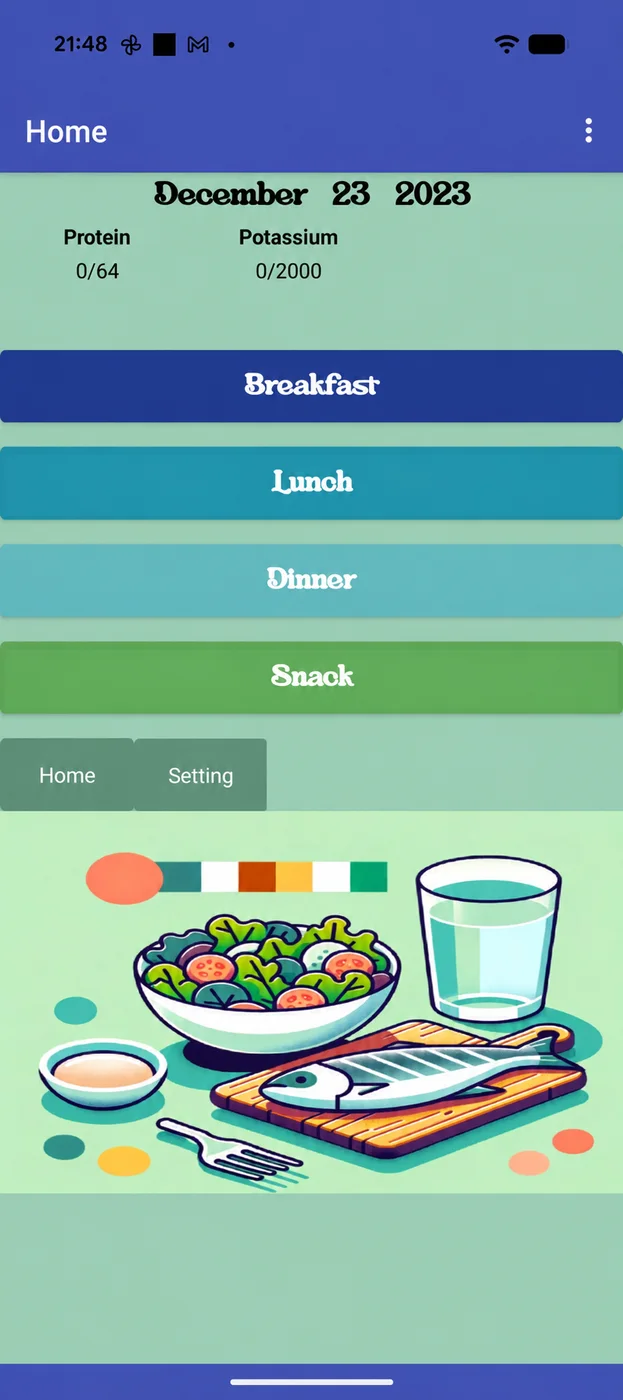
Version 1 Kidney Buddy home screen
Home screen. The earliest interface focused on basic meal logging and two nutrient targets.
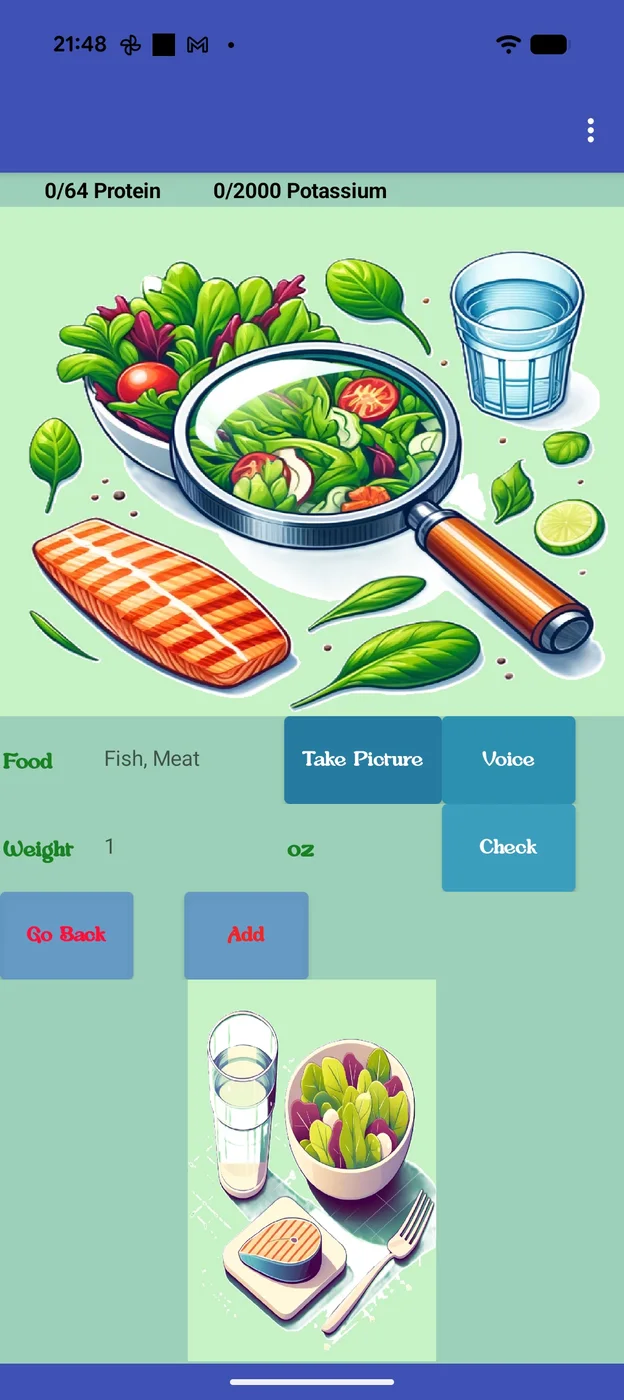
Version 1 Kidney Buddy add-food screen
Add food. An early input flow for recording food and checking protein and potassium.

Actual Version 1 screens from the original MIT App Inventor proof of concept.

Version 1

Could the Idea Work?

Initial Prototype · MIT App Inventor

We started with the smallest useful version of the idea: a local-only prototype that let users log meals and monitor protein and potassium. Version 1 was about proving the concept—not competing, scaling, or building production infrastructure.

Product infrastructureLocal data onlyTracked: protein · potassiumNo competition award
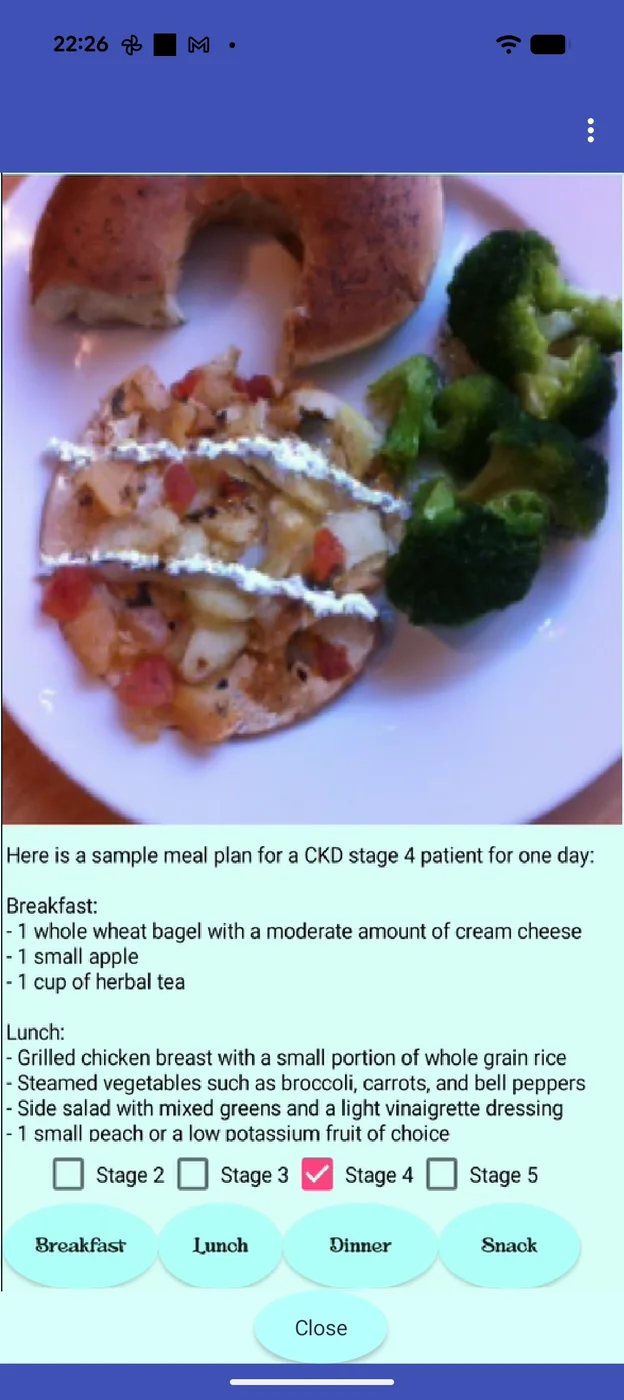
Version 2 Kidney Buddy meal-planning screen
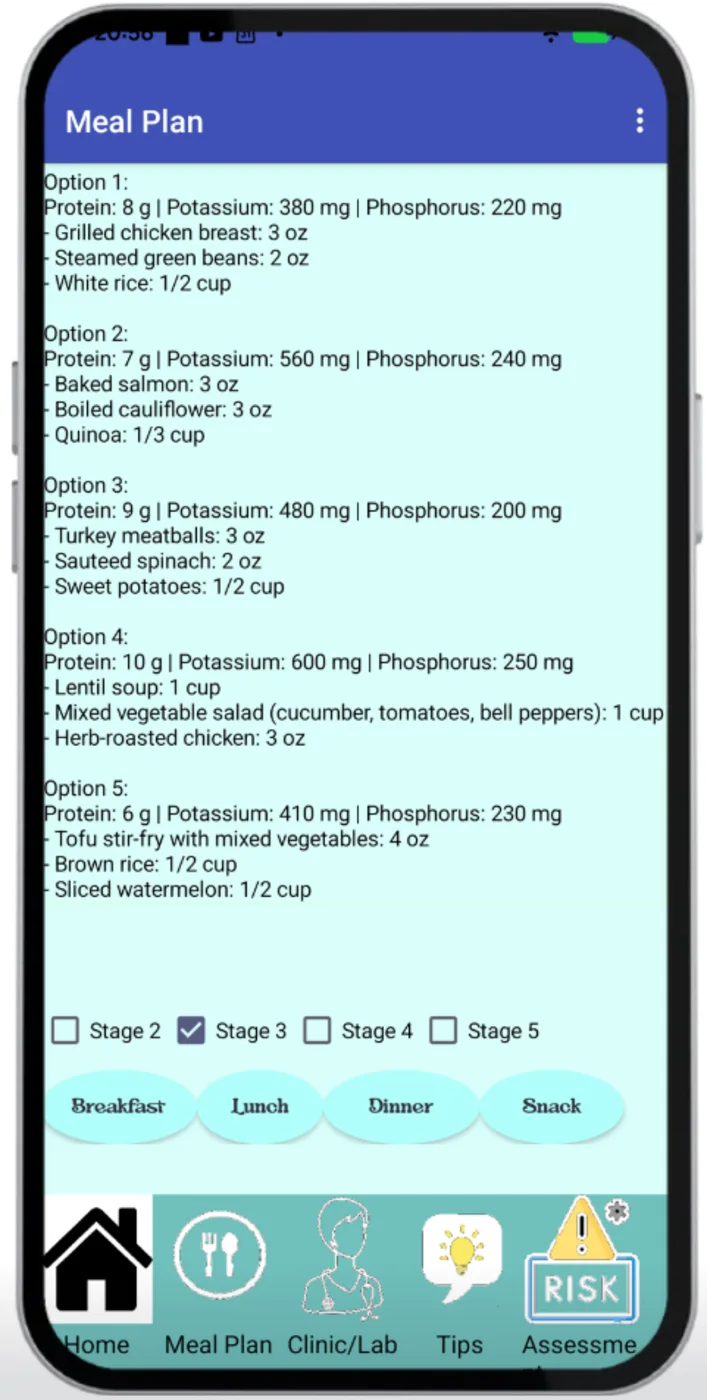
Meal planning. Kidney Buddy began helping users plan meals, not just record them.
Version 2 Kidney Buddy nutrition report screen
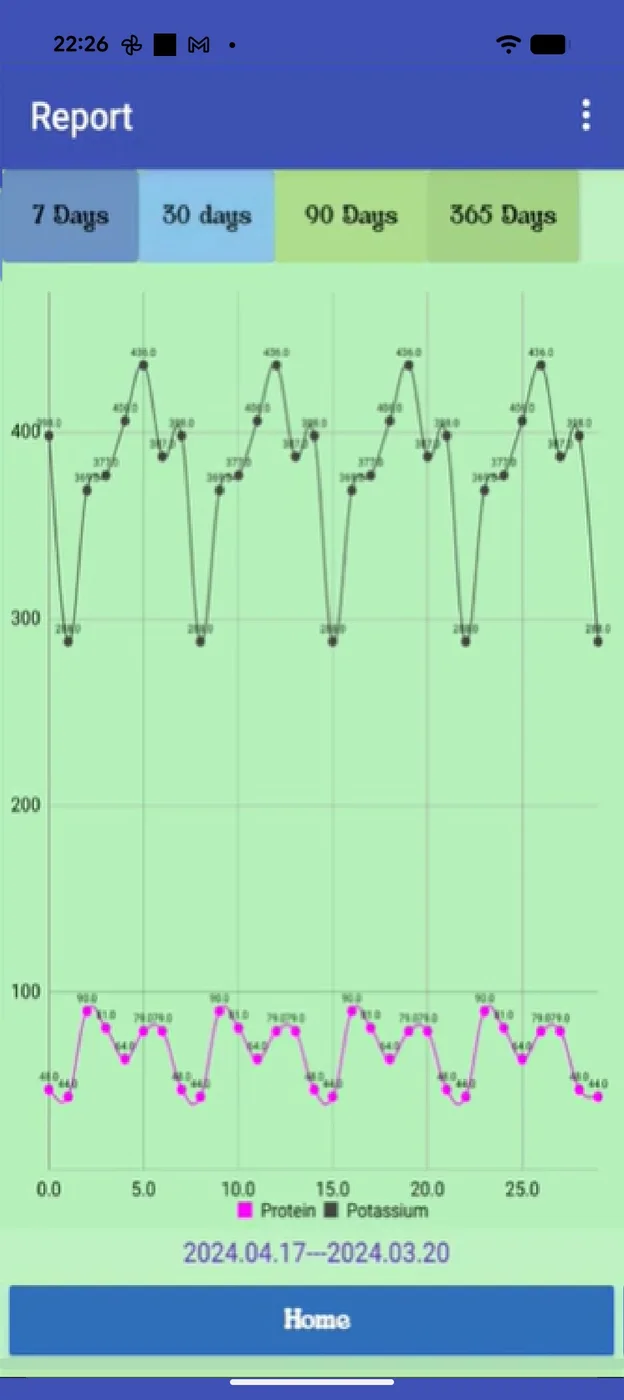
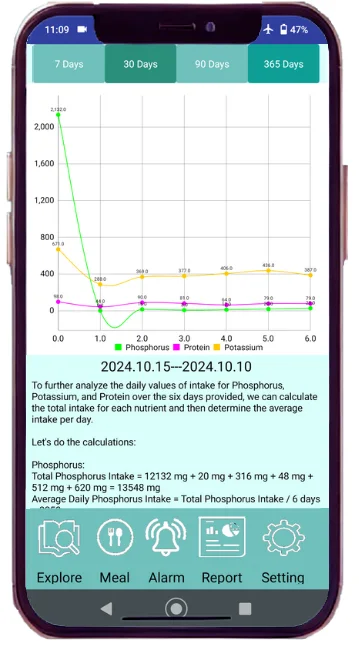
Nutrition reports. Version 2 added longer-term reporting so users could review nutrient patterns beyond individual meals.

Version 2 added meal planning, longer-term reporting, and clinic/lab search while remaining a local-data prototype.

Version 2

Could It Help With More Than Tracking?

Feature-Expanded Prototype · MIT App Inventor

Version 2 broadened the original concept. We added meal planning, nutrition reports, and clinic/lab search while keeping the underlying data local to the device. This was the first version to receive external competition validation.

Product infrastructureLocal data onlyMeal planningReportsClinic / lab searchTracked: protein · potassium

First external validation

2024
SD STEAM App Innovators Challenge1st PlaceRecognition for the expanding Kidney Buddy prototype.
Version 3 Kidney Buddy meal dashboard
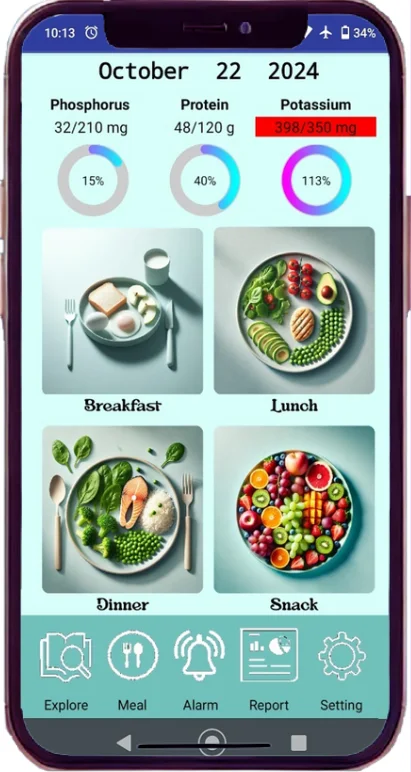
Richer dashboard. Phosphorus joined protein and potassium, alongside a more cohesive navigation system.
Version 3 Kidney Buddy report screen
Reports. Longer-term summaries helped turn logged meals into patterns users could review over time.

Version 3 became the most complete pre-incubator prototype, with broader CKD support and a more polished interface.

Version 3

Could It Become a More Complete CKD Companion?

Refined Competition Prototype · MIT App Inventor

Version 3 added phosphorus tracking alongside protein and potassium and expanded the experience with risk assessment, educational tips, personalized settings, and more cohesive navigation. It was still local-data software, but it became the version that earned broader national and international recognition.

Product infrastructureLocal data onlyRisk assessmentEducational tipsPersonalized settingsTracked: protein · potassium · phosphorus

National & international recognition

2024
Congressional App Challenge · FL-23Winner · 1st Place
2025
Blue Ocean Student Entrepreneur CompetitionTop 30 PitchSelected from 12,784 participants representing 163 countries.

Additional recognition: Conrad Challenge — 2025–26 Conrad Finalist & 2024–25 Conrad Innovator Award · Global Youth Entrepreneurship Challenge 2025 — U.S. 2nd Place · Paradigm Challenge 2025 — Finalist · Diamond Challenge 2025 — Advanced to Pitching Round · National STEM Festival 2024 — Finalist

Version 4 Android Kidney Buddy food scan and nutrition summary screen
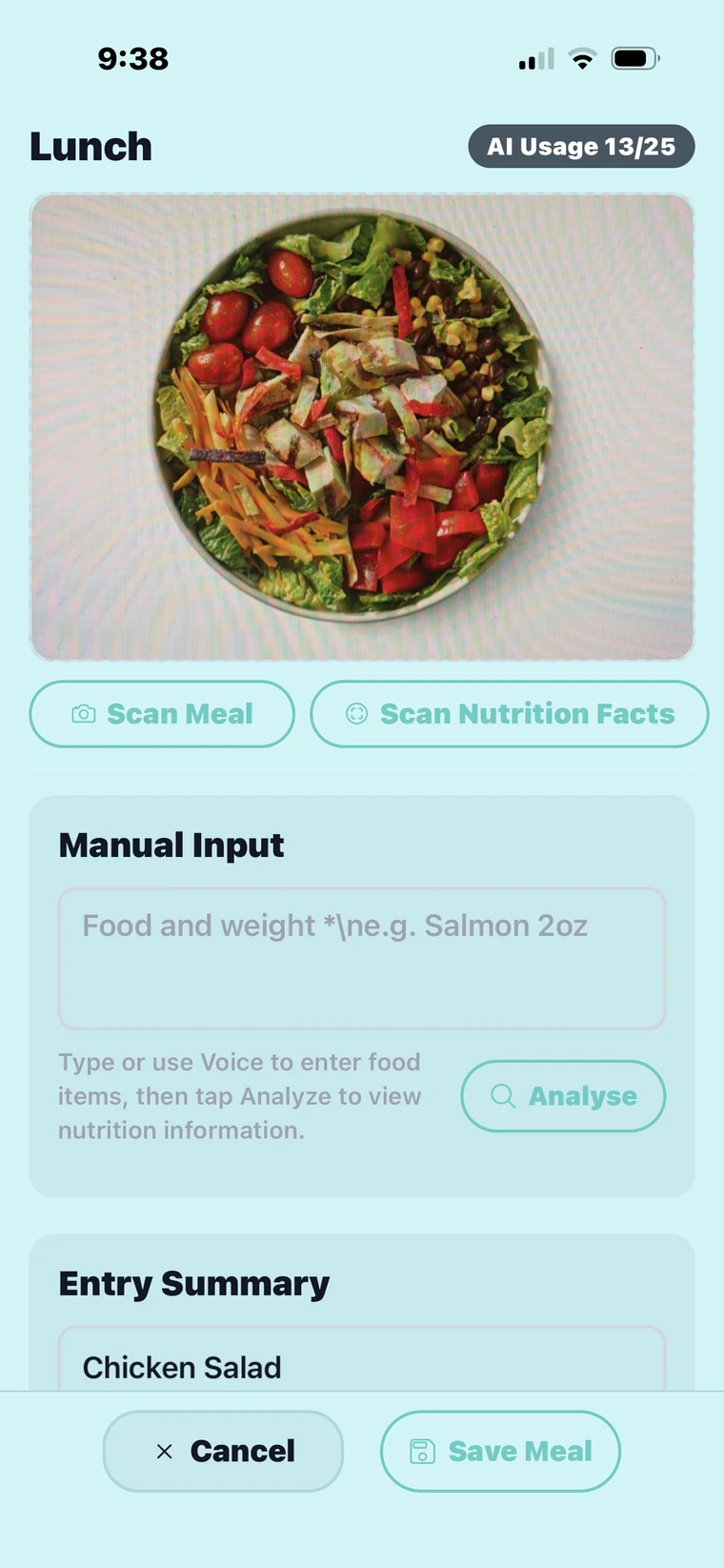
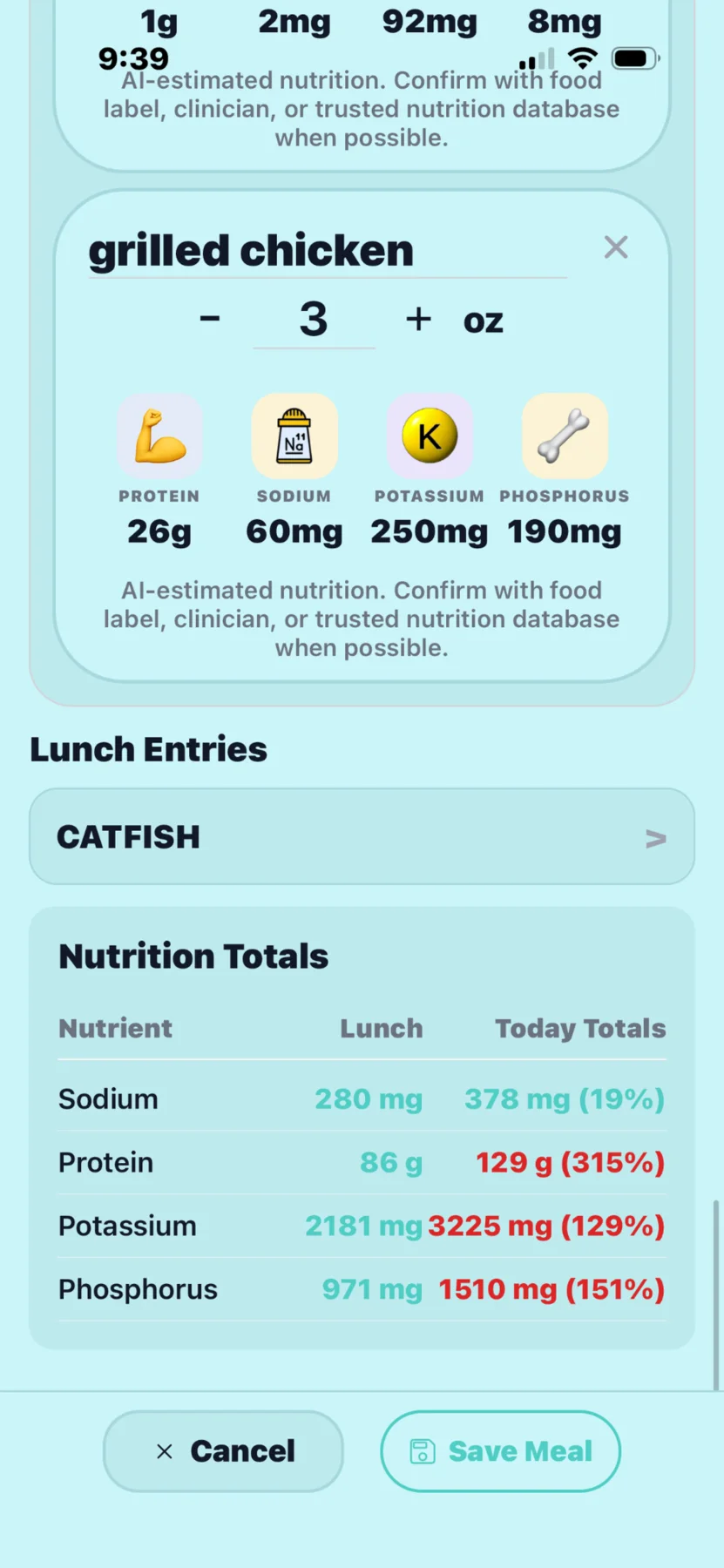
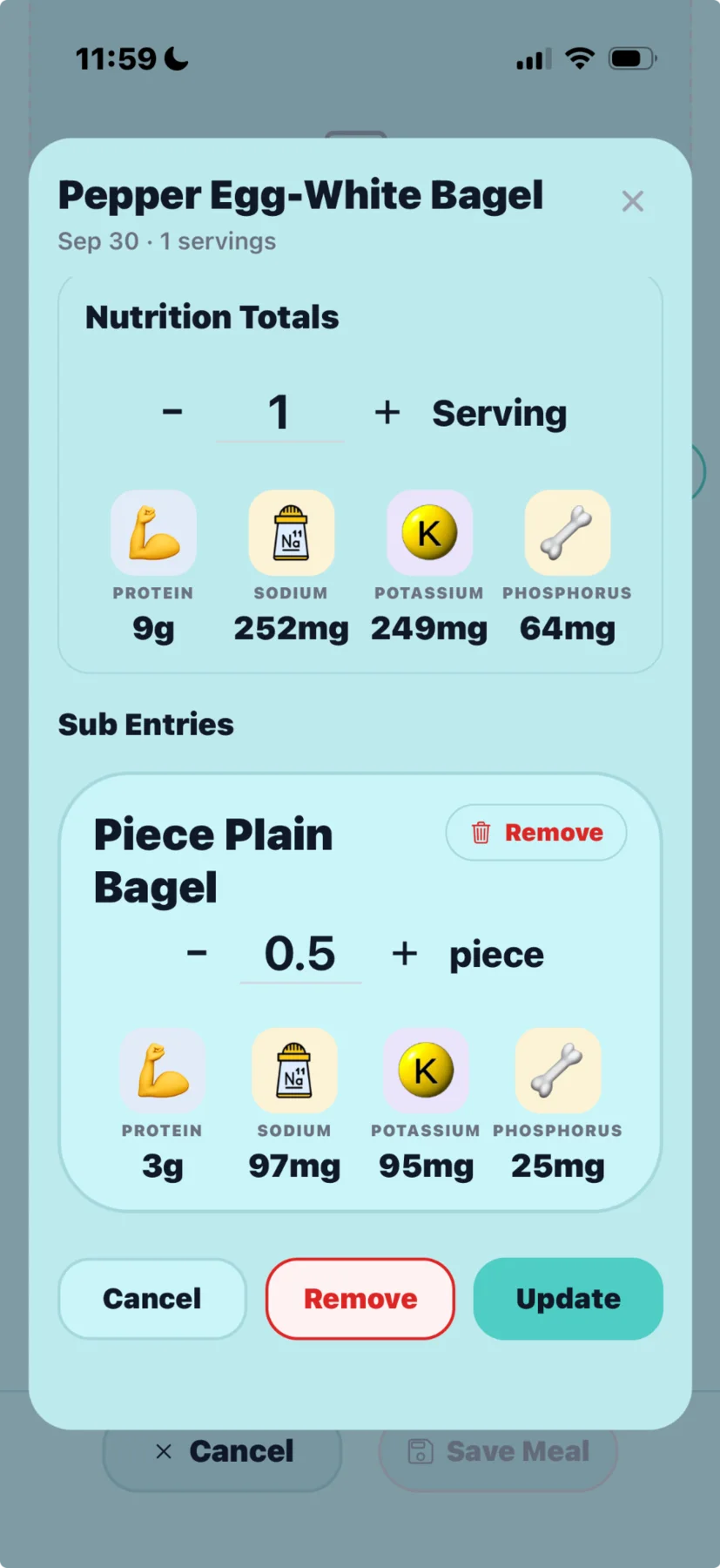
Food scan and meal summary. Version 4 expanded meal logging with photo capture, nutrition-facts scanning, serving-size adjustment, and clearer nutrient totals for the meal and the day.
Version 4 Android Kidney Buddy meal plan screen
Meal planning. The Android release retained and extended planning support, helping users move from tracking meals to deciding what to eat next.

Version 4 turned the strongest pre-incubator prototype into a marketable Android product while keeping data stored locally and expanding practical nutrition support through food scanning, meal summaries, and meal planning.

Version 4

Could the Prototype Survive Real-World Use?

Marketable Android Release · MIT App Inventor

After the incubator, Version 4 became Kidney Buddy’s first marketable Android release while still storing data locally on the device. It expanded the product experience with food and nutrition-facts scanning, per-meal and daily nutrient summaries, adjustable serving sizes, and usage limits for AI-powered features for free users.

Product infrastructureLocal data onlyFree-user AI limitsFood + label scanMeal & daily totalsServing-size adjustmentNo subscriptions yetTracked: protein · potassium · phosphorus

Version 5

What Would It Take to Go Cross-Platform?

TypeScript · AI-Assisted Development · Android + iOS

As Kidney Buddy’s functionality and cross-platform goals expanded, our original development approach became increasingly limiting. Alan and I co-led the transition toward TypeScript and AI-assisted programming. Version 5 adopted a local-first architecture: high-frequency data is saved on the phone first for faster performance, offline usability, and reduced network traffic, while only necessary data is synchronized to Supabase for services such as authentication, subscription and AI-usage enforcement, and optional backup and restore. This version also added Android + iOS support and sodium tracking for the first time.

Product infrastructureLocal-first storageSelective cloud syncBackup & restoreSubscriptionsAndroid + iOSSodium tracking introduced

Clinical Perspective

A Nephrologist’s Perspective

“Kidney Buddy is a very useful app to help with our patients’ daily meals, help with their preparations and help with all their restrictions. I can definitely see a lot of benefit for our patients. So I would actually recommend this app to be used in our patients’ day to day life.”

Dr. Zhi Mao, MD Nephrologist · North Texas Kidney Disease Associates
Dr. Zhi Mao shares his perspective on Kidney Buddy.

Leadership

Leading Through Change

7 contributors · 3 years · 5 major versions

Over three years, seven students contributed to Kidney Buddy as the team evolved. Alan and I co-led the project, setting priorities, coordinating responsibilities, onboarding new contributors, and maintaining continuity through five major versions. As the project moved from prototype to product, we also had to decide when to redesign, when to add features, and when the original technical approach had reached its limits.

Alina’s role: co-team leadership · product direction · team coordination · UI/UX design · development · user/medical feedback · launch execution

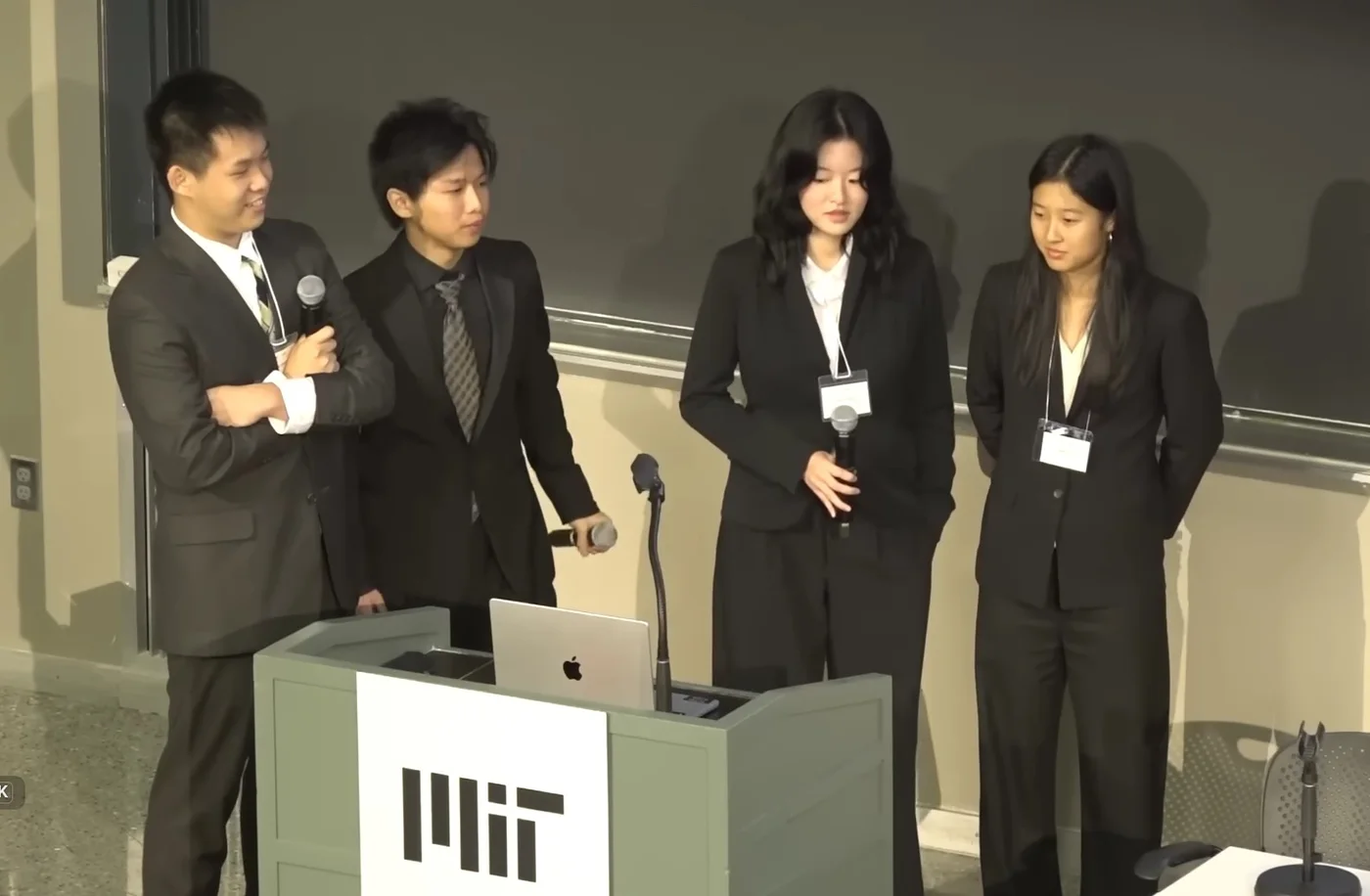
Kidney Buddy team presenting at MIT
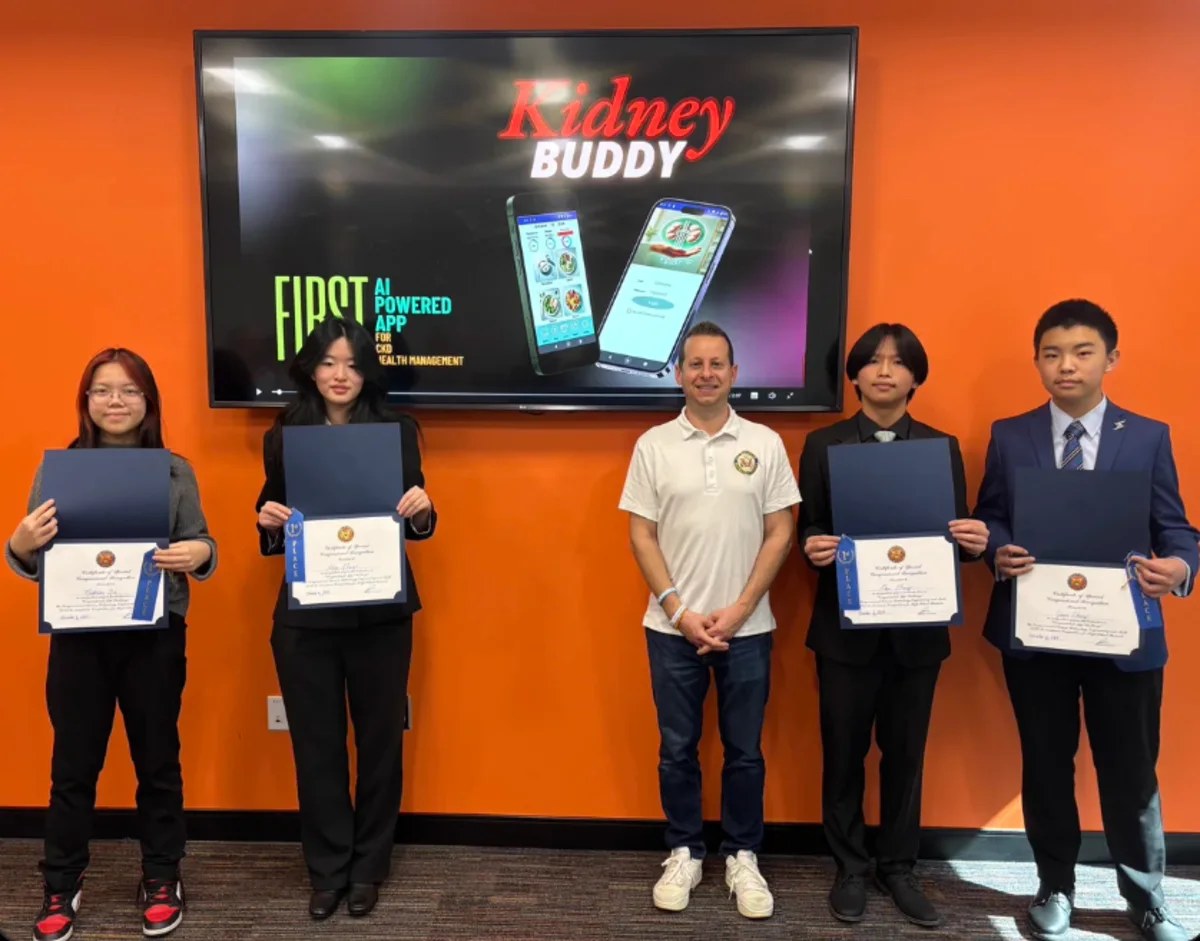
Kidney Buddy team members with certificates at an award event
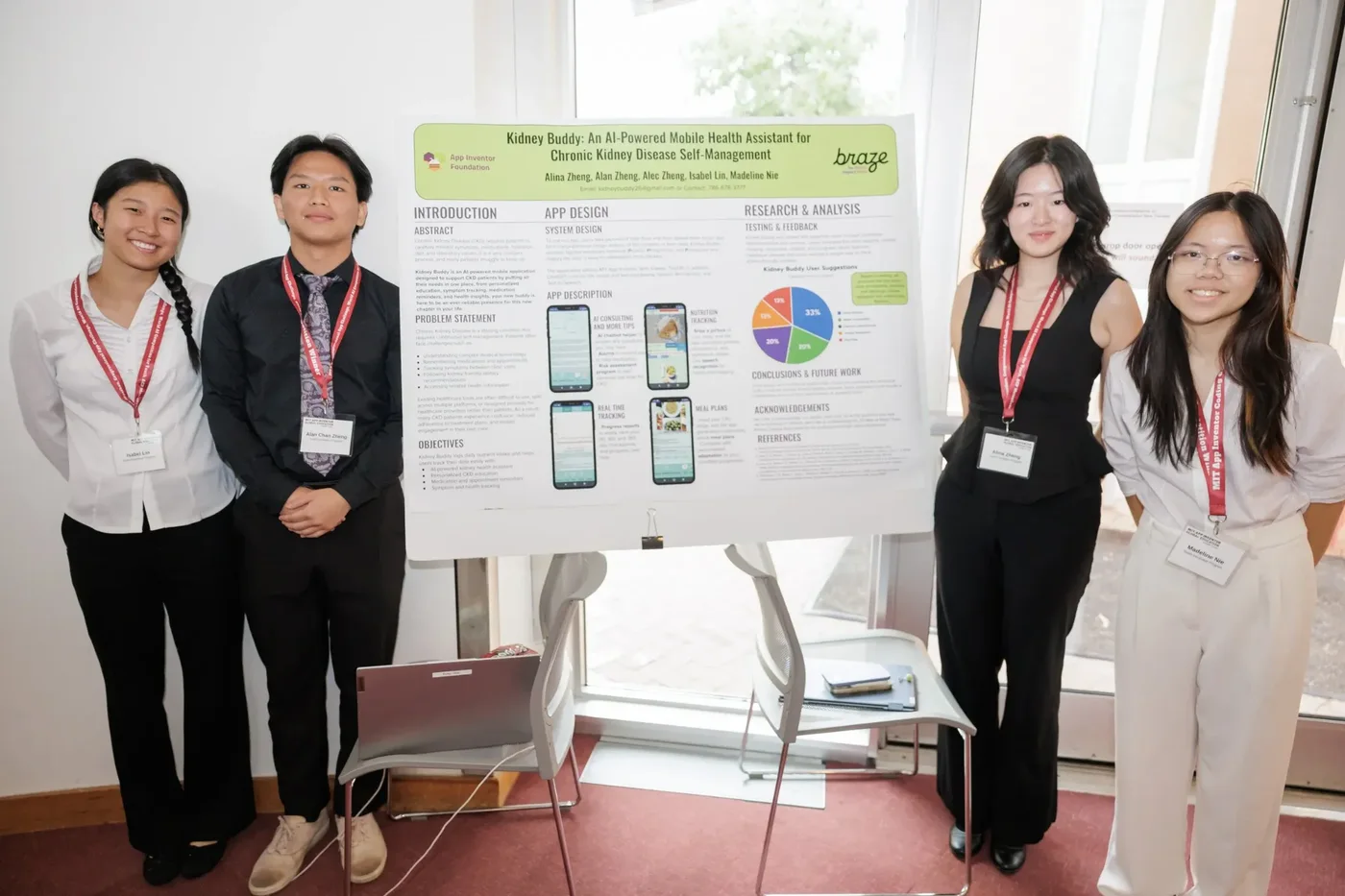
Kidney Buddy team members presenting beside a Kidney Buddy poster
Kidney Buddy’s team evolved over three years. These photos capture different contributors and stages of the project—from competition and presentation to product development.

Reflection

What I Learned From Continuing

At first, building meant getting an idea to work. Then it meant making that idea better. Eventually, I learned that even a polished prototype is very different from a product real people can rely on.

Kidney Buddy taught me to keep building past the point where a competition ends. Each limitation—technical, practical, or organizational—became another question to solve rather than a reason to stop.